Analyze feedback for a RAG agent
The Feedback view provides continuous insight into perceived response quality, agent adoption, and support needs. It also helps prioritize documentation fixes based on user feedback.
Console path: Agents > [Agent] > Feedback.
Track quality indicators
Select an analysis period: 7 days, 30 days, 90 days, Month, or Custom.
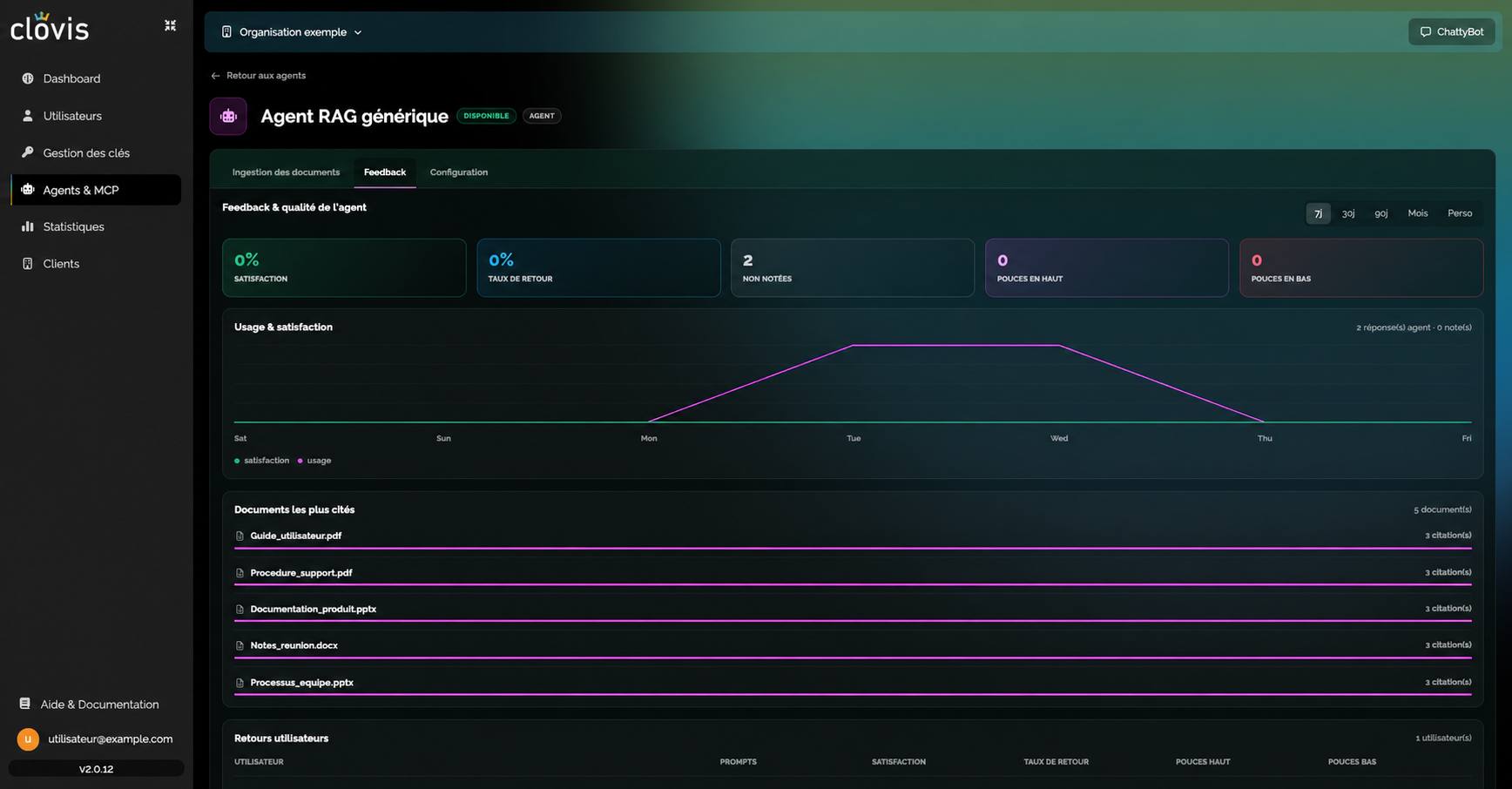
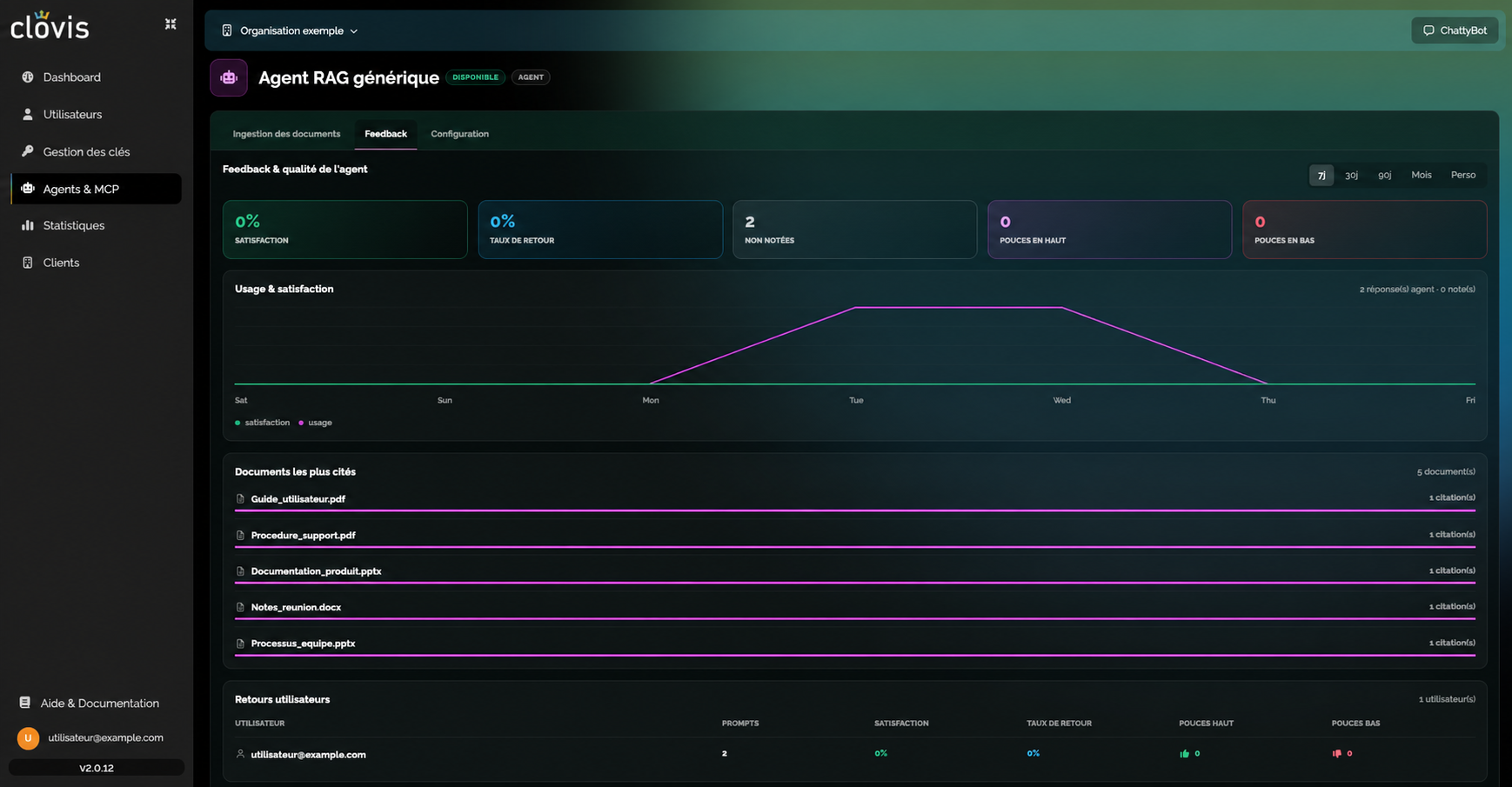
The upper section contains:
- the overall satisfaction rate;
- the feedback rate, meaning the proportion of responses that received a rating;
- the number of unrated responses;
- the number of thumbs up and thumbs down ratings;
- the Usage & satisfaction chart, showing changes in response volume and satisfaction over the selected period.
Identify the most cited documents
Most cited documents ranks the sources most frequently used by the agent. For each document, it shows the number of citations, positive and negative rating breakdown, and associated satisfaction rate.
This information can reveal a heavily used document that generates unsatisfactory responses. The bar below each row provides a visual summary of its satisfaction level.
Review user feedback
The paginated feedback list can be filtered:
- by rating: All, Positive, or Negative;
- by qualitative tag, such as
accurate_reliableorinaccurate.
Each row shows the question, user, date and time, and classification tag. Hover over a truncated question to display its full content in a tooltip.
Select an item to open its details. The panel contains two columns:
| Section | Content |
|---|---|
| Model response | Available processing steps—analysis, document search, reranking, and generation—followed by the final response and its citations. |
| Reason for thumbs down | Free-text comment left by the user. No free-text comment appears if only a tag was selected. |
This view helps explain why a response was considered unsatisfactory and identify the source documents involved.
Compare negative feedback with the most-cited document list. A frequently used document associated with low satisfaction is a good candidate for priority review.