Memories
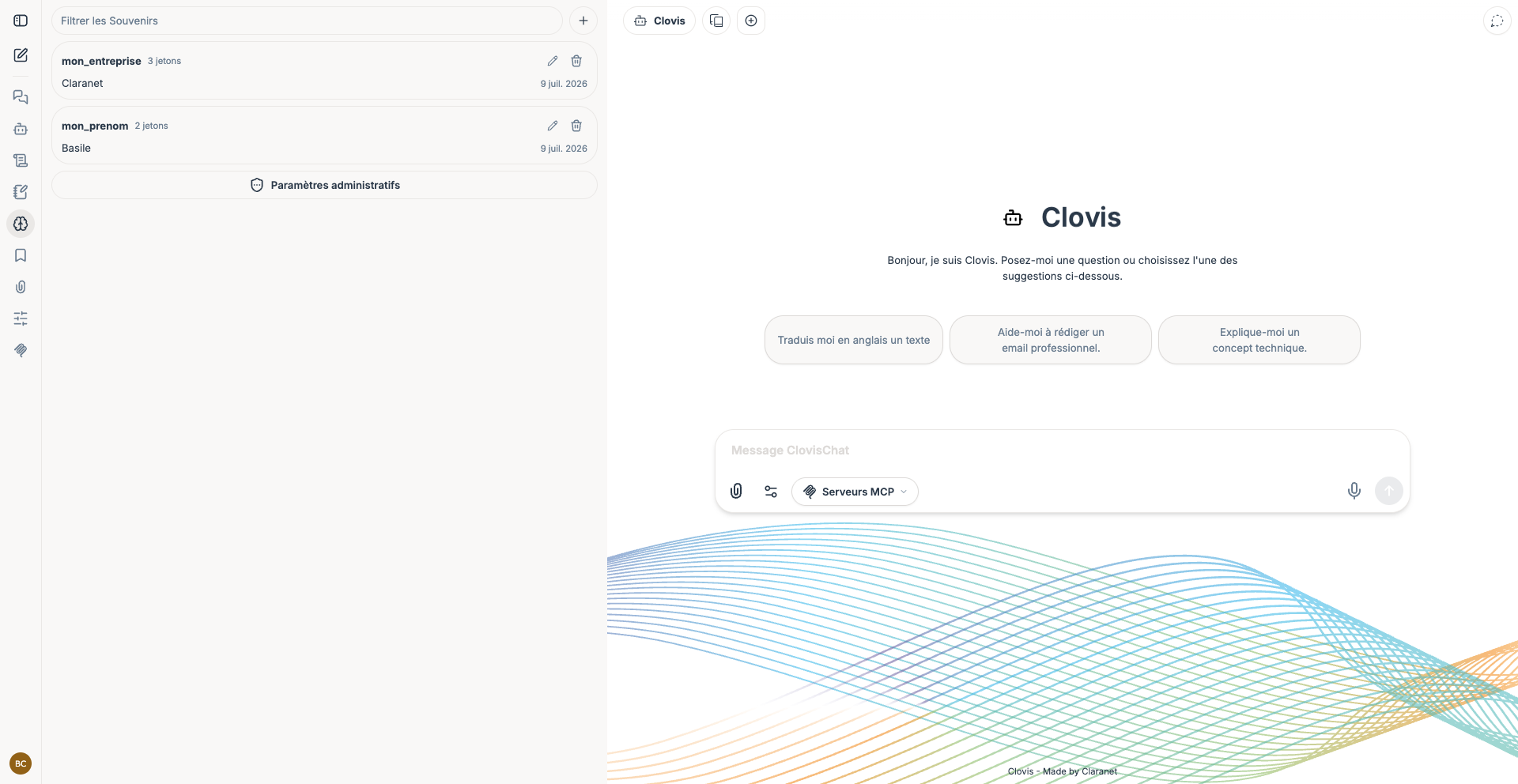
Memories allow Clovis to retain useful information from one conversation to the next. They save you from repeatedly providing the same context and help tailor responses to your situation.
What are memories for?
A memory can contain stable, reusable information, for example:
- your first name;
- your company or team name;
- your role;
- a language or formatting preference;
- professional context useful across several conversations.
When a new conversation starts, Clovis can use this information to better understand your request. A memory supplements the chat context but does not replace the precise instructions required for a task.
View memories
- Open Memories from the navigation bar.
- Browse the list or use the Filter Memories field.
- Select a memory to view the information it contains.
Each entry displays its name, a content preview, the number of stored items, and its modification date.
Edit a memory
- Find the relevant memory in the list.
- Select the edit icon.
- Correct or add information.
- Save the changes.
Keep memories up to date: incorrect or ambiguous information can reduce response quality.
Delete a memory
Select the delete icon next to the memory, then confirm if prompted. Delete information that is no longer useful or that you no longer want Clovis to consider.
Best practices
- Keep only durable, genuinely useful information.
- Put details specific to one task in the relevant conversation instead.
- Never store passwords, API keys, secrets, or unnecessary sensitive data.
- Review the list regularly and correct outdated information.
- When context matters, state your request clearly in the chat even if a memory exists.
The Memories feature and permitted actions may depend on your organization's configuration and permissions.
Memory examples
| Memory | Purpose | Information to remember |
|---|---|---|
| Professional profile | Tailor the level of detail and examples to your work. | “I am a marketing manager in the industrial sector.” Avoid personal information that is not useful to conversations. |
| Response preferences | Receive responses more often in your usual format. | “I prefer concise answers in English, with a table for comparisons.” |
| Company context | Avoid redefining a name or internal vocabulary in each conversation. | “My company is called Acme; we call our business customers partners.” |
These memories should remain general and durable. A one-time deadline, folder contents, or details of a temporary assignment belong in the relevant conversation or project instead.